
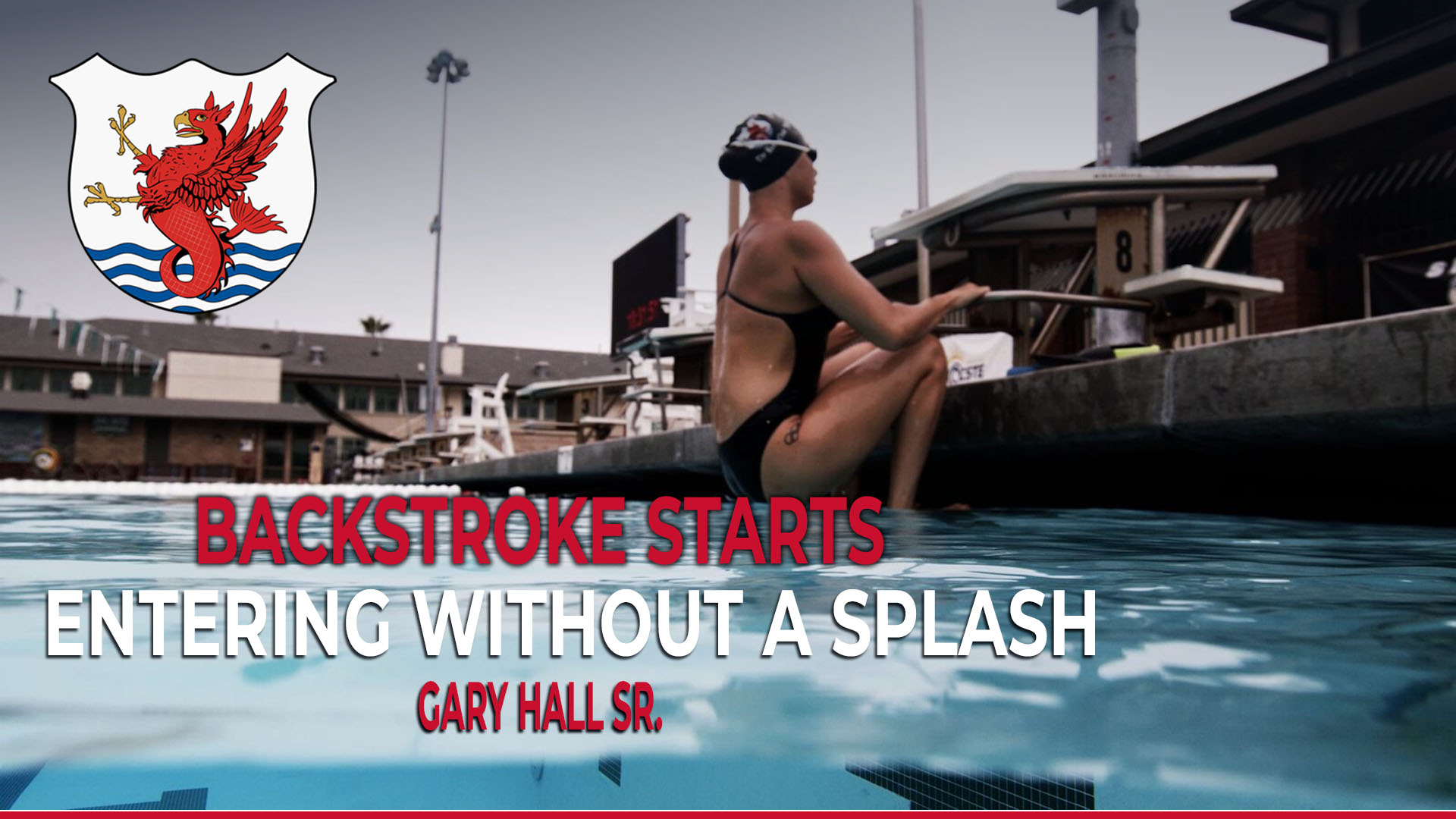

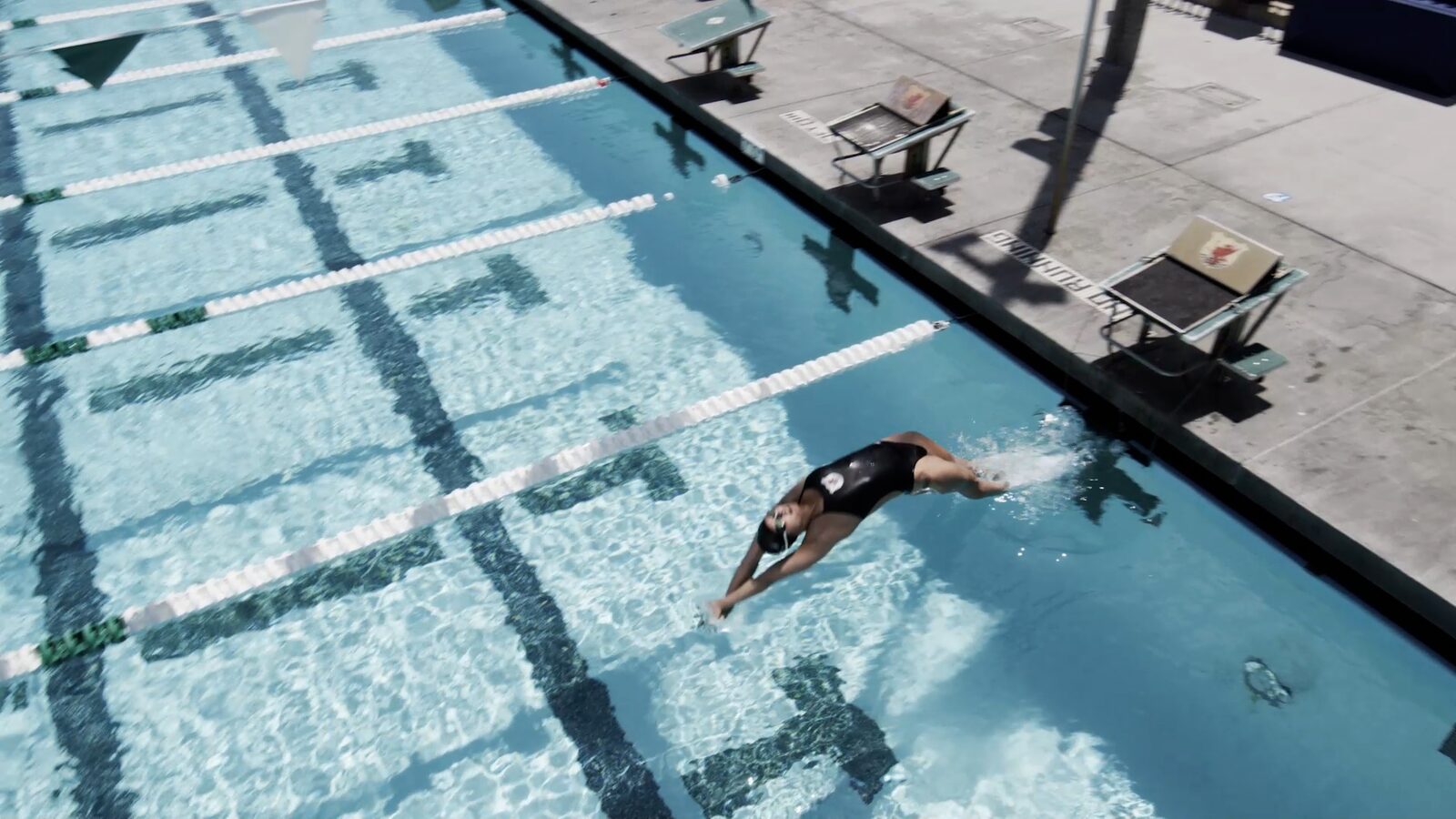
A correct backstroke start is a thing of beauty. There is no splash, and there is no sound at entry. Instead the swimmer disappears into the water with a swish, then immediately begins dolphin kicking toward the flags. An incorrect start looks almost the opposite. The swimmer flops or crashes on entry, then fights to find any rhythm at all. So much of a race gets decided in the first three seconds. That is why we treat the backstroke start as one of the most valuable skills in the sport. Below are the ten technical keys we teach every backstroke swimmer at The Race Club.
Our target trajectory off the wall, steep enough to clear the surface and flat enough to avoid a deep entry.
The dolphin kick rate we look for underwater, since a fast, tight kick beats a slow, long one every time.
That is the maximum distance a swimmer may travel underwater before surfacing, per current World Aquatics rules.
Building the Launch Position
Getting into the right position on the wall determines everything that follows. Before the horn even sounds, the swimmer must find a stable, aerodynamic set position. That position should launch up and back, never forward. The next five keys cover exactly how we build it with every swimmer we coach.
1. Start From a High Position
Unlike a freestyle start, which drives forward and down, a backstroke start begins at water level. It must launch upward and backward instead. Therefore the swimmer should get completely airborne before touching the water again, since that airborne phase removes drag from the entry. To achieve this, we ask swimmers to keep the hips above the waterline in the set position, never sunk beneath it.
2. Keep the Back Straight and the Head Aligned
In the set position, the back should stay straight rather than rounded. The line of sight should point back behind the block, not down at the water. Whether the torso leans forward, sits straight up, or tilts back depends on where each swimmer feels most comfortable. Indeed, we have seen all three positions work well at the elite level, so we let each swimmer find the angle that holds steady.
3. Set the Toes High and Shoulder Width Apart
Reaching that high set position starts at the feet. So the toes need to sit as high on the wall or gutter as possible, spaced about shoulder width apart. Consequently, this foot placement gives the swimmer the leverage to drive the hips upward, not simply forward off the wall.
4. Use the Backstroke Wedge
Starting from a high position carries one obvious risk. The feet can slip on a wet wall. Consequently, we have every swimmer use the backstroke wedge whenever one is available on the blocks. The wedge locks the feet in place, so the swimmer can commit fully to the upward drive without hesitating at the signal.
5. Launch at a 45 Degree Angle
The launch trajectory needs to clear the water, yet it should not send the swimmer too high into the air. A 45 degree angle is the target we coach for. A flatter angle keeps the swimmer too close to the surface, while a steeper angle causes an entry that is too deep. Getting this angle right, in fact, sets up everything that follows, all the way through the underwater phase and the 15 meter underwater rule that comes next.
Leaving the Wall With Speed
Once the swimmer is airborne, the second half of the start decides how fast the race actually begins. These final five keys cover the entry, the underwater phase, and the breakout together. A mistake in any single one of them erases the work already done on the wall.
6. Use At Least Two Strong Coupling Motions
The arms swinging back into a streamline and the legs kicking upward both act as coupling motions. Together they add real velocity to the entry. Throwing the head back can serve as a third coupling motion as well. However, the head must return to alignment before the swimmer hits the water, or the entry will go too deep. A safer option, and one we often recommend, is simply keeping the head aligned for the entire start.
7. Wrap the Hands Into Hyper Streamline
We frequently see swimmers enter the water with the hands apart or the elbows bent. Both mistakes add drag at the exact moment it matters most. So the hands need to wrap together into a hyper streamline position before contact with the water. Nothing else about the start matters much if the entry itself is not clean.
8. Start the Dolphin Kick Immediately
As soon as the swimmer is underwater, the first downward kick should begin right away, with no gliding in between. Otherwise the swimmer loses speed faster underwater than on the surface. We coach a fast kick tempo of 140 strokes per minute or higher, working equally in both directions. The right number of kicks before breakout depends on how that underwater speed compares to the swimmer’s backstroke speed.
9. Initiate the First Pull on the Final Up Kick
At breakout, the lead arm should stay straight overhead. The swimmer starts the first pull on the final upward kick, just before the backstroke kick begins. Never start with both arms pulling at once. Instead, use only the lead arm, keeping it extended above the head through the transition.
10. Keep the Face Down at Breakout
For the first stroke or two after breakout, we have found it faster to keep the face just below the surface and hold the breath briefly. This applies unless the swimmer kicks all the way to 15 meters. Too many swimmers lift the head far too high at breakout, which adds a significant amount of drag during this transition. We encourage every sprinter to experiment with this technique in practice, since two swimmers we admire, Sara Curtis and Kliment Kolesnikov, have both excelled at the 50 meter backstroke using exactly this approach off the wall. Meanwhile the stroke rate should stay fast through these first strokes, then settle into the pace appropriate for the event.
A correct backstroke start is a thing of beauty. You see no splash. You hear no splash.
Everything here is taught, tested, and perfected at camp.
Four days in San Diego with the Race Club coaches. Full stroke analysis, sensor testing, and every start on this page applied directly to your swimming. Moreover, most swimmers leave camp with best times by day four.
Private Lessons
Meanwhile one on one coaching targets your strokes, your turns, and your starts.
Gold Online Coaching
Likewise our remote coaching gives you personal feedback on video you send in.
Video Library
Furthermore, our video library breaks down every stroke, start, and turn on demand.
