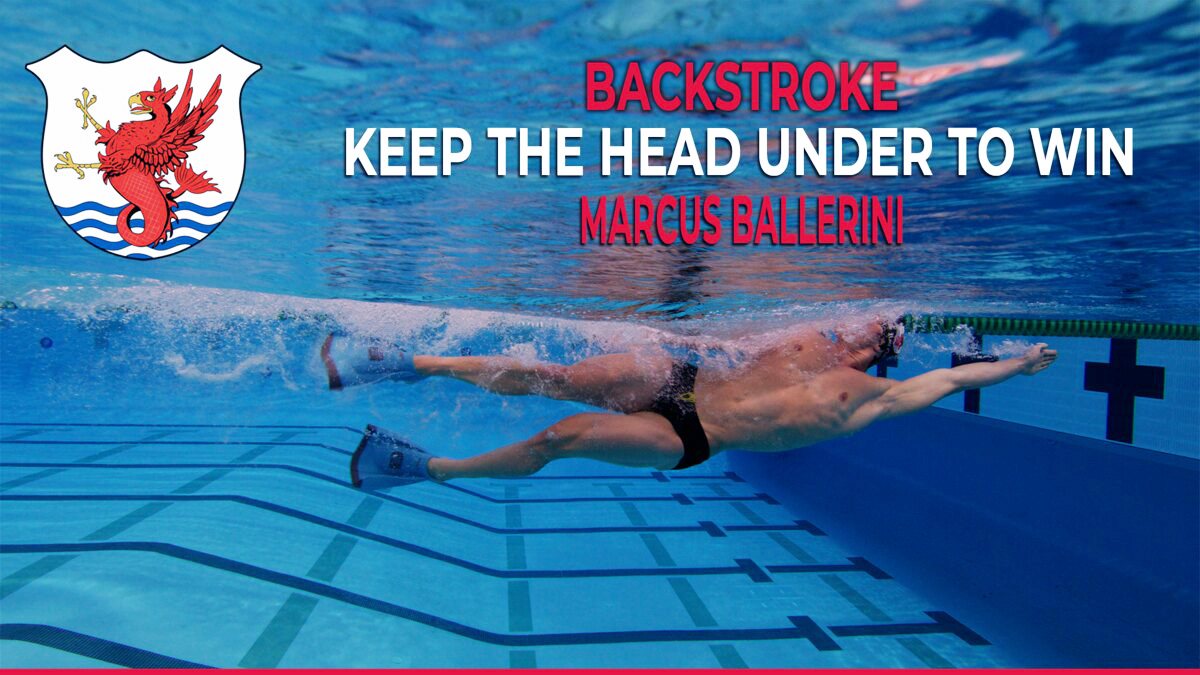

Most backstroke races leak speed in the same place, the backstroke breakout. In fact, the moment you trade a tight underwater kick for full stroke is where frontal drag spikes. However, the quickest swimmers have found a fix, and it is almost invisible. Specifically, they keep the head submerged for the first strokes instead of lifting it to meet the air. As a result, the body stays flat, the hips ride high, and the transition stays smooth.
Efficiency Is the Key in Backstroke
Backstroke is the most efficient stroke in the pool, because it varies its velocity the least. However, that smooth line turns fragile at the breakout. Here you swap the torpedo shape of the underwater for the rougher shape of surface swimming. Consequently frontal drag jumps at the exact moment you least want it to. Because water is roughly 787 times denser than air, any shape you give it, it punishes.
The usual culprit is the head, one of the most common backstroke mistakes we see. Specifically, the head weighs ten to twelve pounds, so it behaves like a bowling ball on a short lever. Lift it to hunt for the surface, and the hips sink behind it at once. Instead, hold the head still and low, and the whole line stays flat. Therefore the cheapest speed in backstroke is simply leaving your head low.
Therefore drag punishes any rough shape at the breakout.
As a result, a clean line beats raw power here.
So lifting it early drops the hips behind you.
Keep the Head Submerged Through the Breakout
Here is the whole technique in one line. First, finish your underwater kick as usual. Then break out, yet keep the head submerged for about two strokes before you let it rise. Because the head leads the body line, holding it under keeps everything long and flat. As a result, frontal drag stays low right where it normally spikes.
The payoff shows up in three places. First, the breakout carries more of your underwater speed into the swim. Next, the body position stays flat, so the hips never stall. Finally, the transition feels seamless rather than abrupt. Notably, you are not staying down any longer, you are simply keeping the head quiet while the arms take over.
Hold for Two Strokes
First, keep the head under for two full strokes after the breakout.
Eyes Up, Crown Back
Meanwhile, point the eyes up while the crown stays low and in line.
Let the Hips Ride High
As a result, the hips stay near the surface instead of dropping.
The Fastest Backstrokers Do This
Watch the best backstrokers and you will notice the same habit. Notably, Kliment Kolesnikov, the men’s 50 backstroke world record holder at 23.55, leaves the breakout with the head tucked and low. Consequently his line barely changes, and his first strokes look like an extension of the underwater rather than a separate gear.
Sara Curtis takes it to the extreme. In August 2026, the Italian broke the women’s 50 backstroke world record at the European Championships in Paris. First she clocked 26.63 in the semifinal, then she lowered it to 26.56 in the final. Remarkably, she keeps her head submerged for nearly the entire lap, surfacing only as much as the rules demand. Therefore her 50 looks less like a swim and more like one long, controlled breakout.
How We Teach It at The Race Club
Start small, then build. First, swim easy backstroke and hold the head under for a single stroke off each wall. Then add a second stroke once the line feels stable. Next, take it into faster repeats, because speed is where the habit truly pays off.
So here is your challenge. Keep the head submerged for two strokes on every breakout this week. Then, if you dare, hold it under for a whole lap.
Everything here is taught, tested, and perfected at camp.
Four days in San Diego with the Race Club coaches, full stroke analysis, sensor testing, and your breakout rebuilt stroke by stroke. Moreover, most swimmers leave with best times by day four.
Private Lessons
Likewise, one on one coaching targets your strokes, your turns, and your goals.
Gold Online Coaching
Furthermore, our remote coaching gives you personal feedback on the video you send in.
Video Library
In addition, the full library breaks down every stroke, start, and turn on demand.