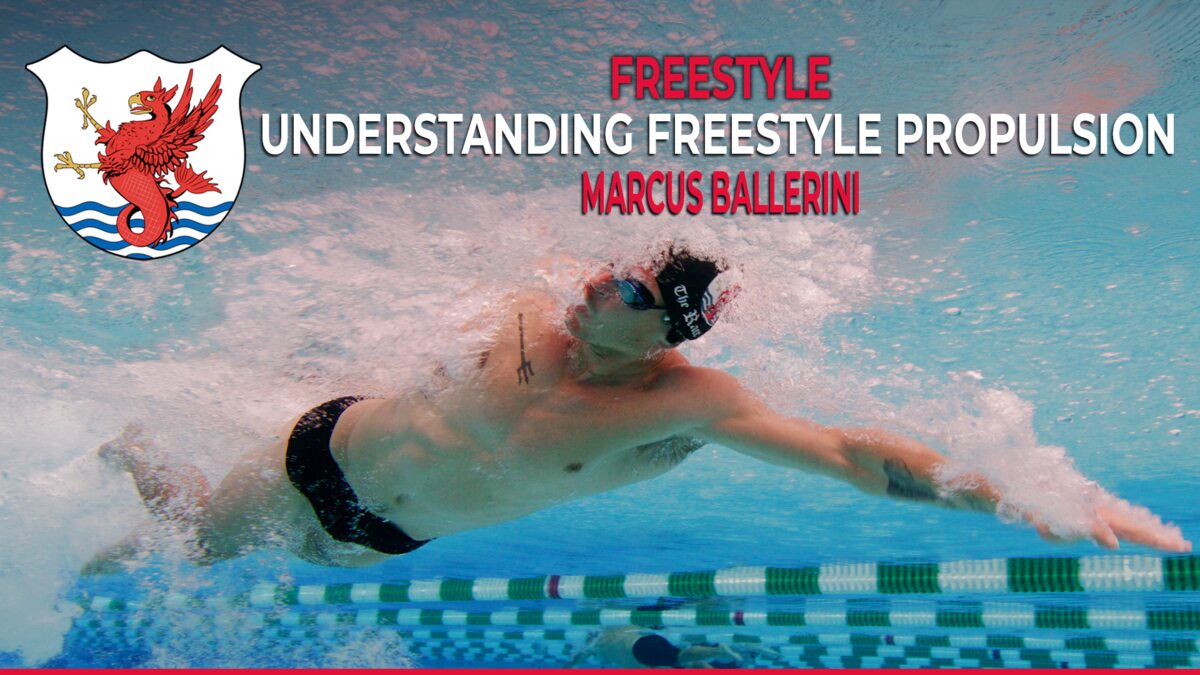
While Freestyle is often swimmers first foray into the sport. It is anything but simple. In Freestyle the smallest of inefficiencies over a race may cost you the most. In this technique breakdown we will focus on propulsion from the pull. First, we will see why developing a stronger pull doesn’t always mean getting faster. Then we will cover what we must do to ensure your propulsion is directed properly.
The Nuance With Propulsion
While many people associate greater propulsion to always mean greater speed this is not always the case. It is possible that you can add power and increase the propulsive forces. However, you may still be directing them in an aberrant fashion. That being said, the direction comes first. Therefore, before adding more power, first ensure you are pulling in the correct direction.
But to direct force correctly, we must also understand something first. That is, what in our pull is doing the actual directing. In regard to upper body propulsion, almost all of it comes from the hand. Less than 10 percent of the pull’s propulsion comes from the arm itself moving against the water. While the arm does offer impressive surface area, its cylindrical shape works against it. As a result, it is far less relevant than the paddle-like shape of our hand. Given this, we then understand that our hand is the director of our pull propulsion. Wherever it faces is where our force is applied and thus opposite to the direction that we travel.
Percentage of pull propulsion derived from surface area of the hand.
Freestyle sits behind only backstroke for low velocity variation during the swim.
Where Your Pull Sends Force
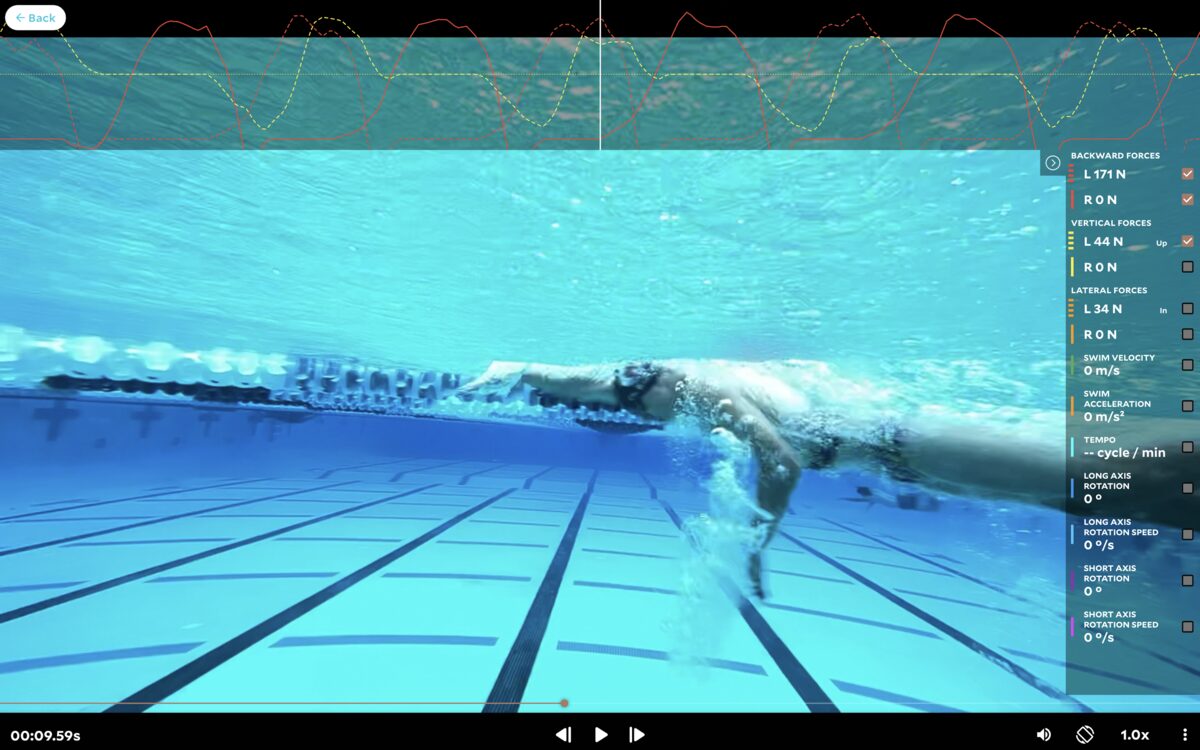
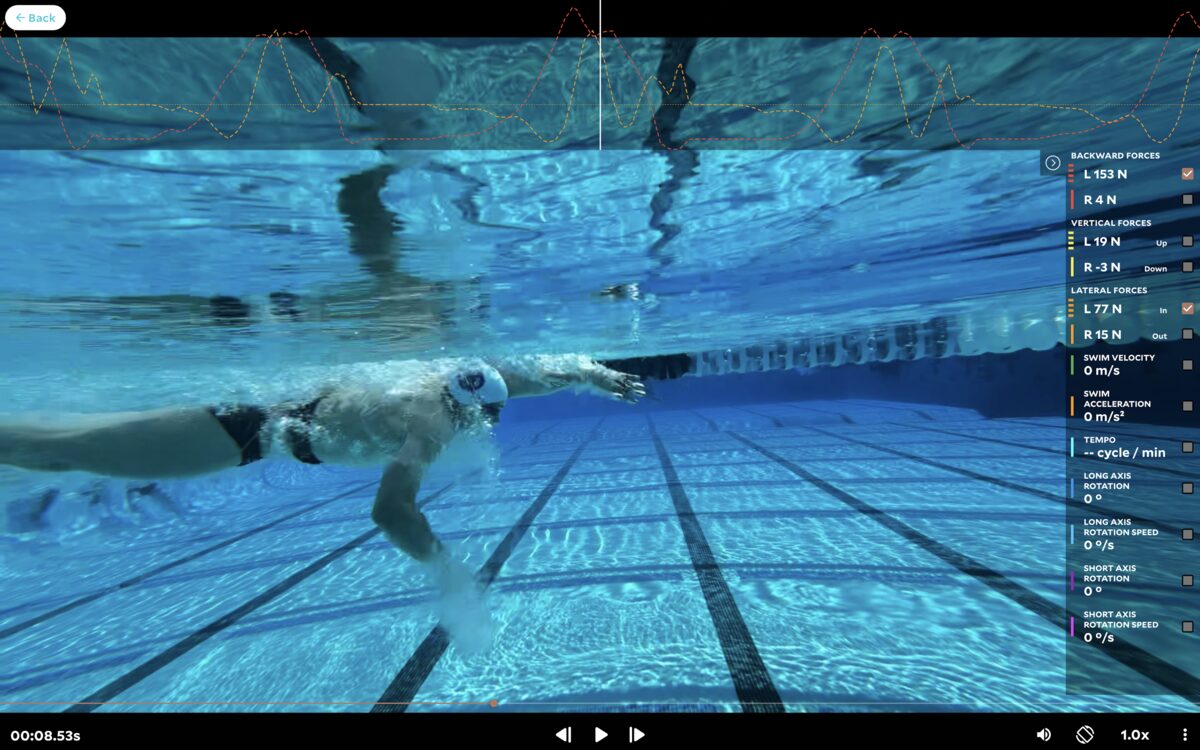
When trying to pull as effectively as possible we must consider the three dimensions in which we can direct force. We have lateral, vertical, and horizontal forces. Specifically, these break down into in and out, up and down, and forward and backwards.
Forward and Up Forces
The most obvious forces to minimize are our forward forces and up forces. These are the most sinister, since they actively reduce your speed in the water. There are two common examples. First, extending your wrist too early in the stroke creates a forward force. Second, staying in flexion at the end of your stroke presses you up on the water. A forward force directly works against your propulsive backforce, while the upforce is slightly less direct. The upforce you apply presses back on you. As a result, the water forces your body lower and creates greater frontal drag that you must overcome.
In and Out Forces
The next two forces we will consider are in and out forces. While these are not nearly as detrimental as the two above, they still demand our attention. In freestyle, out forces are most common at the beginning of the stroke. Unlike in forces, they should be reduced to close to 0. In forces, due to the anatomy of the shoulder joint, are expected to occur around the peak pull propulsion. Both result from facing the wrist inwards or outwards while pulling. Moreover, that holds regardless of where in the stroke they occur. With this in mind, we still want to keep both in check. Otherwise, excessive in and out forces blunt our strokes impulse and peak backwards propulsion. While not all propulsion can be directed backwards, we want to maximize the percent of it that is.
Back and Down Forces
Finally, we consider the forces we want to take advantage of, our down forces and backwards forces. We will start with the most obvious, the backwards forces. We of course want to maximize backwards forces. To do this, keep the palm facing backwards for as much of the pull as you can. This matters most during the peak propulsive moment, which occurs as the hand passes under the shoulder. As for downforce, the amount we want varies with the race distance we are training for. The shorter the race, the more downforce we want. Downforce lifts the body higher and reduces the drag we experience. However, it requires a higher stroke rate to fully take advantage of this. Which is partially why it is unsustainable in distance events.
Forward Force
An early wrist extension pushes water forward. As a result, it works directly against your backward propulsion.
Up Force
Staying in flexion at the finish presses up on the water. Consequently the body sinks and frontal drag climbs.
Out Sweep
Out force shows up early in the stroke. Therefore it should be trimmed close to nothing.
In Sweep
Some in force is natural near peak propulsion from the shoulder. Still, excess blunts your impulse.
Back Force
Keep the palm facing back through the pull. In particular, hold it as the hand passes under the shoulder.
Down Force
Down force lifts the body and cuts drag. However, it needs a higher stroke rate, so favor it in shorter races.
Fixing the Pull, Force by Force
Now that we can name each direction the hand sends force, we can train it. First, we quiet the forces that fight us. Then, we sharpen the ones that drive us forward. The progressions below do exactly that. Each one pairs with a simple tool we lean on at The Race Club. Instead of chasing raw power, we are teaching the hand where to point.
In and Out Sweeps
The in and out sweep is mostly a wrist problem, so the fix starts at the hand. First, feel the moment the palm turns sideways, because that is where force leaks off the line of travel. A great tool here is the ISO paddle, which exposes any sideways slip the instant it happens. A good drill to pair with it is the one arm freestyle drill. It lets you isolate and watch a single hand at a time. As a result, you learn to hold the palm square to the water rather than carving it in and out. Over time, the out sweep at the front fades toward zero. Meanwhile, the natural in sweep near the shoulder stays small and controlled.
Forward and Up Force
These two usually trace back to timing. For instance, the wrist extends too early at the front, or the hand presses up at the back. Therefore the fix is about keeping the fingertips pointed down through more of the pull. Fingertip paddles help here. Their greater surface area makes it easier to feel changes in the orientation of the wrist. Consequently you groove an earlier catch and a cleaner release. The body also stops shoving itself down into its own drag.
Back and Down Force
Now for the forces we want. The goal is simple. First, keep the palm facing straight back for as long as possible. Then add just enough down force for your event. Fingertip paddles reward this directly, because they only load when the hand is truly facing back. Meanwhile, to build down force for shorter races, press the catch slightly deeper and lift the tempo to match. In distance work, ease that down force off. The higher stroke rate it demands is hard to hold for a full 1500.
Like This Breakdown? Read the Book
Did this breakdown click for you? Then you will feel right at home in our book. In fact, Fundamentals of Fast Swimming takes the same approach to the whole sport. It works stroke by stroke, with the physics kept simple and the fixes made practical. So if you want the full picture, you can grab a copy in the Race Club shop.
Everything here is taught, tested, and perfected at camp.
Spend four days in San Diego with the Race Club coaches. You get full stroke analysis, sensor testing, and every freestyle cue on this page applied directly to your swimming. Moreover, most swimmers leave with best times by day four.
Private Lessons
Meanwhile one on one coaching targets your strokes, your turns, and your goals.
Gold Online Coaching
Likewise our remote coaching gives you personal feedback on video you send in.
Video Library
Furthermore, our all encompassing video library breaks down every stroke, start, and turn on demand.